

Italijanski arhitekta u Rimu i Šangaju, na stazi koja vodi ka budućnosti. Frančesko Gati je mlad, neobičan i originalan arhitekta, koga smo kontaktirali putem Fejsbuka i napravili kratak intervju sa njim, pijuckajući kafu u Rimu, da bismo ga upoznali i pisali o njemu. Diskretna osoba, senzitivna i predusretljiva, malo govori o sebi i svom putu, putovanju i strastima. „Pišite šta god želite“ rekao nam je.

 Njegov studio je osnovan u Rimu, ali vođen impulsom, napravio je i jedan sličan u Šangaju, u Kini. Priznao je da se za ovo mesto odlučio tražeći odgovarajuću priliku. „U suštini, ja sam u Kinu došao ciljano jer sam zaljubljen u arhitekturu i želeo sam da je usavršavam putujući širom sveta. Ja nisam brz momak, niti takmičarskog duha, i ne sviđa mi se moderna kineska arhitektura, a mislim i da neću naći dovoljno prilika za posao, tako da ću se brzo vratiti u opušteni Rim“.
Nakon gotovo decenije rada u Evropi i Kini, predložena su inovativna rešenja za urbane projekte i unutrašnji dizajn. Filozofija malog studija je da uvek prihvataju samo po jedan projekat, a čini ga samo šest do deset ljudi. „Unutar grupe ja sam uvek vođa projekta, a za svaki projekat zapošljavam jednog projekt menadžera koji vodi računa o organizaciji i logistici. U grupi nema hijerarhije, ali moto koji važi je „dizajn nije demokratski“ zato što smatram da je, radi očuvanja filozofije našeg projekta, potrebno da konačnu odluku donese arhitekta koji predstavlja studio. Ima puno tehničkih konsultanata u studiju, u nameri da omoguće izvesnu fleksibilnost projektima. Generalno, u malim projektima imamo više slobode i možemo više da se posvetimo detaljima, i zbog toga ja više volim takve projekte, iako je razumljivo da nema takve slobode pokreta ili dubine, na velikoj građevini. Mi odbijamo mnogo projekata, posebno ako oni doprinose „da se deformiše svet“ jer se trudim da izrazim nešto i da izbegnem da budem srušen od strane brojne komercijalne i anonimne arhitekture. Imperativ je upoznati klijenta i videti da li on ili ona razumeju i da li odgovaraju filozofiji studija i posla. Shvatanje klijentovog zahteva je od najvećeg zanačaja da bi smo znali da li će studio biti u mogućnosti da ispuni njegova očekivanja.“
On ističe da je rad studija “Diller and Scofidio, Toyo Ito and NL Architects” među njegovim omiljenim.
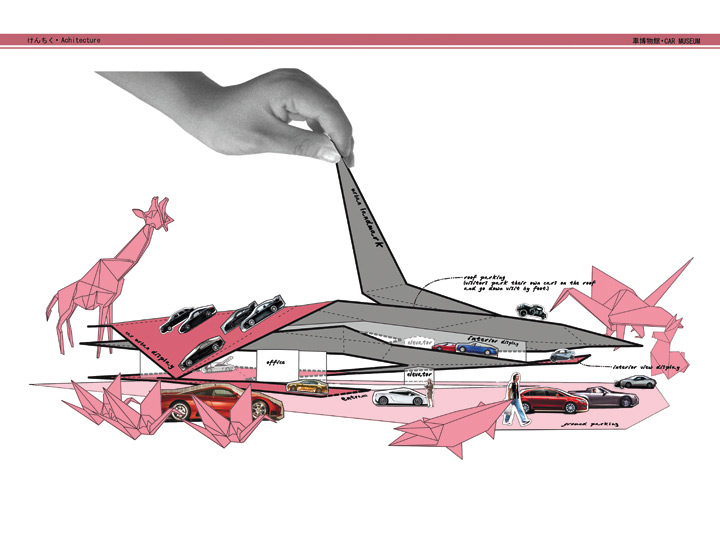
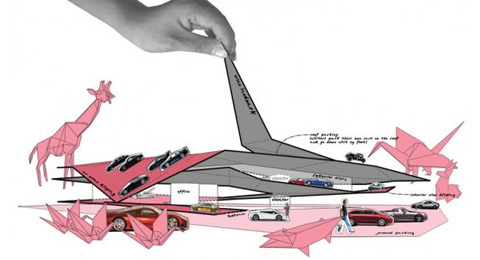
Arhitektura teži da oblikuje prostor sa fleksibilnim površinama, kao u projektu „Drive In-muzej automobila“ u Nanjingu, za koji su dobili Prvu nagradu na međunarodnom konkursu. Origami koji se pojavljuju u slici savršeno oslikavaju ideju. Muzej je napravljen zglobno na dva koncentrična, spiralna nagiba; na spoljnom nagibu posetioci se sopstvenim kolima uvezu u izložbeni prostor, i to iskustvo arhitekta naziva „safarijem“ jer je posetilac, kao osoba koja upravlja automobilom, sam po sebi deo izložbe. Arhitekta opisuje muzej kao „filmsku sekvencu u kojoj automobil igra glavnu ulogu“, građevinu u kojoj se jedna uz drugu nalaze dve panorame vezane za automobile: u prvoj vidimo svesnu nameru arhitekte da prikaže estetiku auto-puta kao i urbani faktor,tj.strukture i materijale koji podsećaju na vijadukt, a u drugoj njegov prenos egronomije unutrašnjosti automobila u muzej. Doteranost i detalji unutar zdanja su u vezi sa njim i u balansu sa njegovim specifičnim funkcijama, te zbog toga posetiocu nije teško da da zamisli da je pre na autoputu u kolima, nego u muzeju.
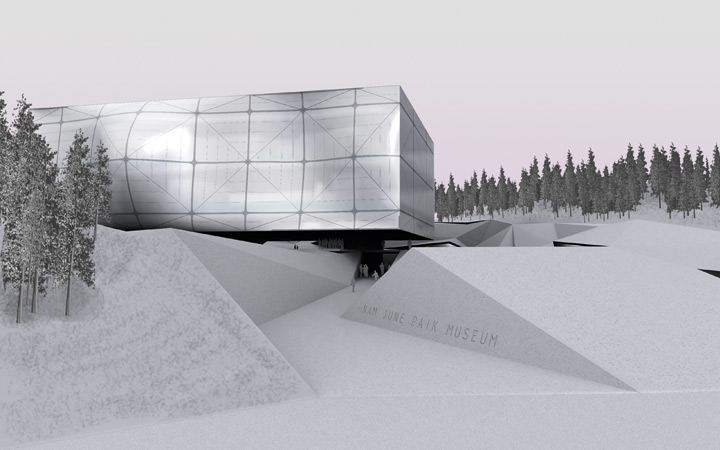
Projekat Nam June Paik Museum, u Koreji, posvećen je jednom od prvih umetnika koji su prepoznali potencijal elektronskih medija i njegov uticaj na kulturu i ekonomiju.
„Kao što su Japanci uspeli da stvore haiku poeziju, video umetnici treba da nauče kako da se izraze u trideset sekundi…Moje najvažnije zabeleške su moji snimci, moje video skulpture. Za moje skulpture vam je potrebno deset-dvadeset sekundi, da ih gledate i ako želite premotate unapred“ (Nam June Paik)
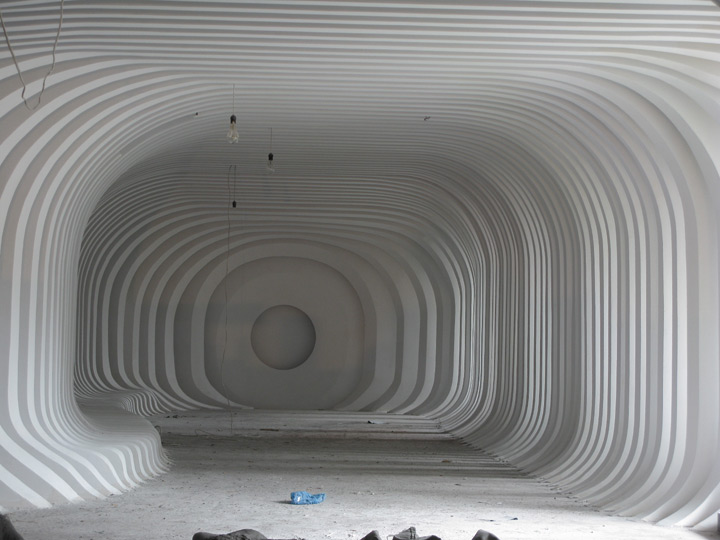
U savremenom ključu projekat predstavlja medijum, suprotstavljenu temu umetnika kroz njegov rad. Sama građevina širi informacije. Pretpostavke doba elektronike i kompjuterske nauke „projekcija, mutacija, simulacija“ kao tri ključne, inspirativne reči arhitekture koja izmešta mnogostruko povećan sadržaj ka spoljašnjosti, na mesto okruženo osrednošću i površnošću, i arhitektura koja izraženim slikama sama sebi daje veliku podršku. U društvu naviklom na ekstremne oblike komunikacije, jedna sofisticirana osoba želi da podigne nivo šoka koristeći velike dimenzije zasićene bojama reklamnih panoa. Tako i muzej postaje neutralna podrška, spremna da prima beskrajan broj slika, informacija i sadržaja. Projekat je podeljen na dva različita dela: središni čvor projekta je monolit položen kao na gradilištu i stran sadržaju, i zahvaljujući ovako posebno naglašenoj nameri uspeo je da ispoštuje mesto ne ugrozivši ga; ali mi „plutamo“ kao provizoran element spreman da sledećeg trenutka odskoči na sledeće mesto. Drugi deo je nizak i krivudav i po obliku se uklapa sa postojećom dolinom punom krivina. Karakter ove građevine nije totalno podražavajući, već zapravo prikazuje oblast u kojoj bi se mogla videti stena izlizana zbog dejstva vetra. „Monolit“ ima stran karakter u odnosu na prirodu, sastavljen je od veštačkih materijala i nesumljivo je blizak sofisticiranoj i ekstremnoj tehnologiji, uz poštovanje ostatka projekta.
Projekat „In Factory, JingAn Six Loft Buildings” u Šangaju
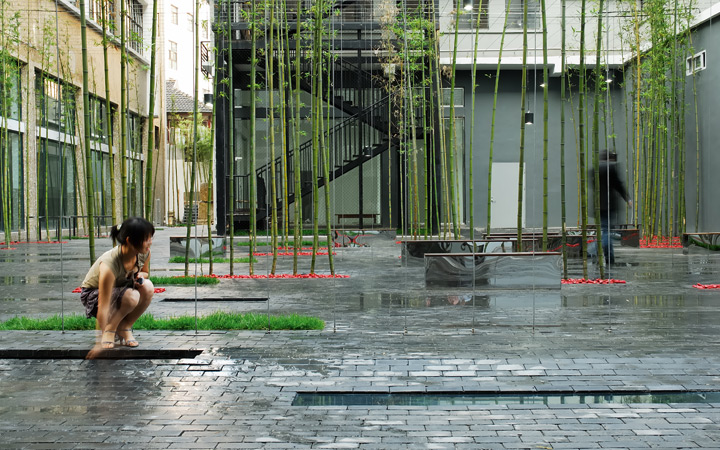
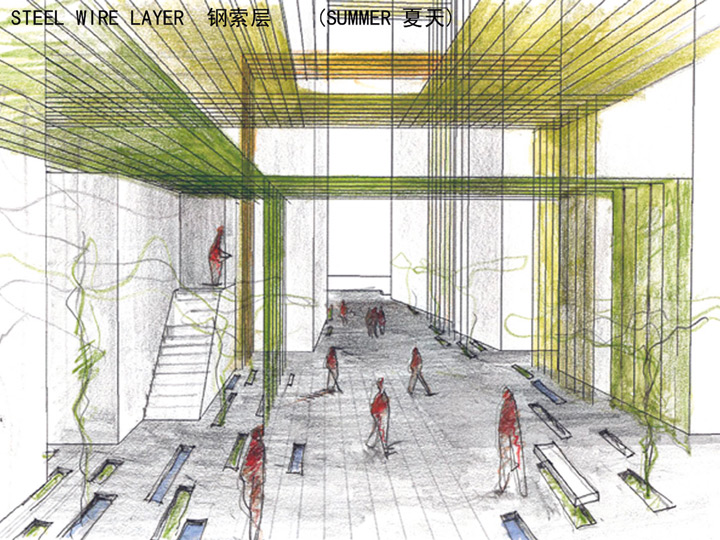
Ovo je projekat rekvalifikacije bivše industrijske zone u centru Šangaja, na prostoru na kome je uvek velika gužva, pogotovo u glavnom sudu gde zupčaste vešaljke proizvode iste vibracije I zvuk, dok se lampe okačene na različitim kotvama pomeraju pri udarima vetra. Nađeno je prihvatljivo rešenje u korišćenju materijala i boja. Korišćeni su neki lokalni elementi poput šljunka i bambusa, ali se oseća zapadnjački uticaj naive I estetskih razmišljanja, preko obeležja kineskih ideograma naslikanih na telima značajnih figura Grinaveja, uz dodatak tradicionalnih i savremenih elemenata, prirodnih i veštačkih, zapadnjačke i istočnjačke mašte. Prilikom šetnje hodnicima, posmatrač gleda smele strukture. Frančesko Gati je uzeo u obzir mogućnost da bi ovaj projekat mogao imati kratak život iz dva razloga: zbog fiksnog i trajnog pločnika i virtuelne, kratkotrajne tavanice napravljene od ulubljenih, žičanih konopaca.
“Red Object” u oblasti Šangaja, je projekat preobražavanja bivše fabrike u poslovnu zgradu sa kancelarijama. Crvena i crna su boje fasade. Ove boje su u prošlom veku predstavljale ideologije i umetničke pokrete lišene obaveza i sposobne da etničke i kulturalne pobude kombinuju sa oblicima inovativnih izraza. Crnom i crvenom predstavlja se napor kretnje ka suštini stvari i dolazi se do bele, a to je praznina u koju su smešteni znakovi i osećaji. List papira na kome je još uvek bilo neophodno pisati je bele boje, dok su reči i greške podvlačene crvenom. Na podudaran i savremen način boje su usklađene sa prikazanim objektima. Za ovu intervenciju preobražavanja bivše fabrike u centru Šangaja, italijanski arhitekta je imao seriju zahteva: mesta predviđena za kancelarije, otvorene i fleksibilne prostore za izložbe i dešavanja, dve prostorije za sastanke, recepciju, bar, nekoliko prodavnica i tehnički deo. Uzimajući u obzir visinu enterijera, odlučeno je da se gornji prostor podeli na dva međusprata povezana mostovima. Na taj način je stvorena centralna, veštačka i neutralna praznina.
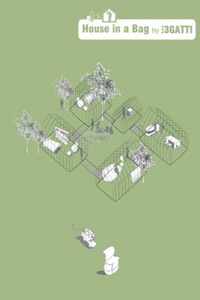
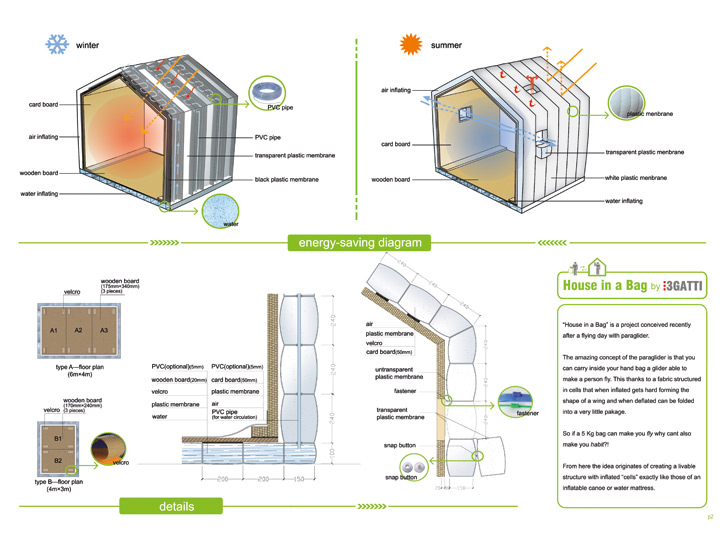
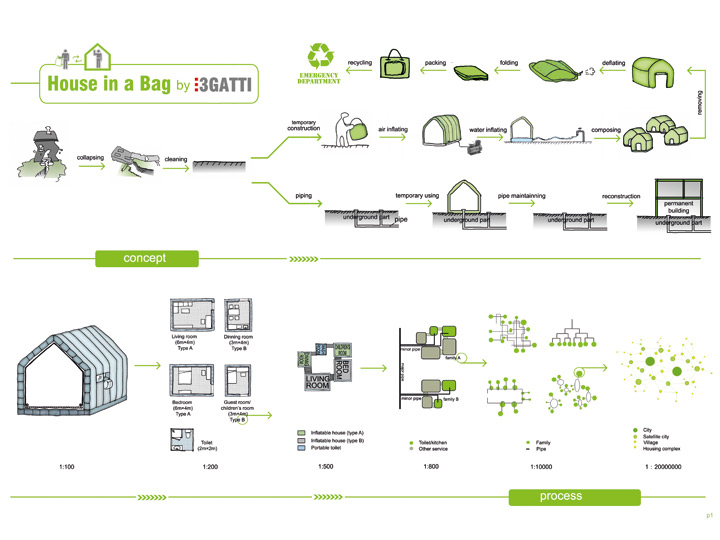
„House in a Bag“ je projekat nastao dan nakon letenja padobranom. Dobitni koncept padobrana je što u sastavu njegove opreme postoji torba u kojoj je jedrilica pomoću koje čovek može da leti. To je moguće zahvaljujući tkanini sastavljenoj od „ćelija“ koje se povećavaju dok ne dobiju oblik krila, i mogu da se smanje u veoma skučenom prostoru. Odavde je potekla ideja o stvaranju građevine takve strukture, sa „ćelijama“ koje se naduvavaju, poput onih kod čamaca ili vodenih dušeka. Zahvaljujući kompresiji vazduha bočna i gornja strana će moći lako da se umotaju, a pomoću creva za zalivanje bašte kroz koji teče voda,se može obmotati sokla i dati se dodatno učvršćenje privremenoj strukturi. Na takmičenju “Idea per la ricostruzione” koju je organizovao Pressletter, ova ideja je osvojila drugo mesto.
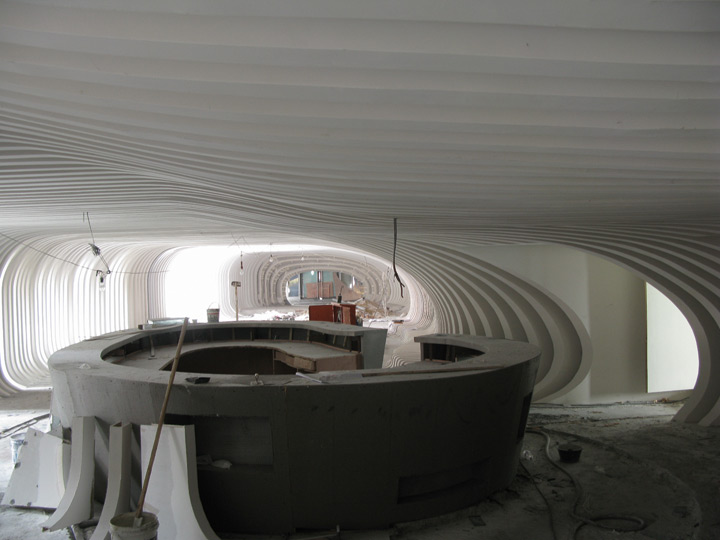
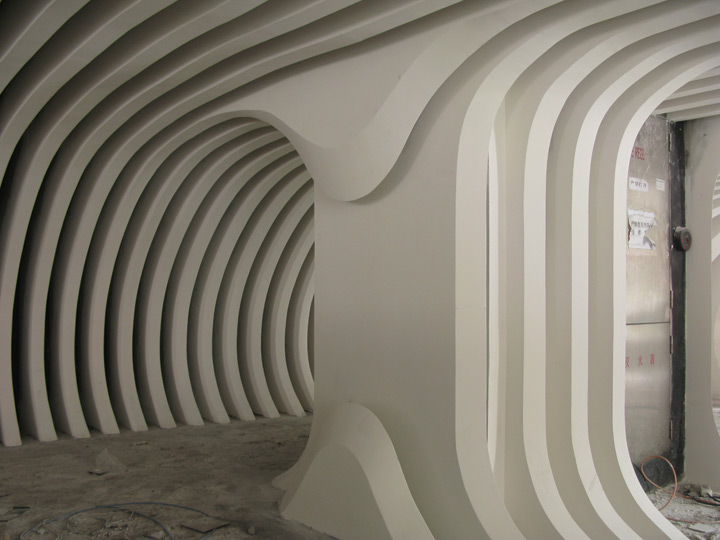
ZE BAR je projekat unutrašnjeg dizajna, pri procesu dovršavanja projekta iz 2006.godine, u kome su predstavljene karakteristike zebra u dinamičnom, naprednom prostoru.
Ovo su neki primeri arhitektonskih izraza studija „3Gatti”. “ Naš rad u Kinu je došao do potpune kontra-težnje; dok je trend svih arhitektonskih studija usmeren na ostvarivanje komercijalnih ciljeva na kvantitativnom nivou, mi se okrećemo ka plasiranju ideje “mali italijanski studio”. U ovoj oblasti Kine imamo sličnu situaciju kao i u SAD, gde brojni arhitektonski biroi rade velike fabrike, i izgubili su identitet što se dizajna tiče ali su ipak moćni na tržištu. Kod nas je obrnuto, mi praktično ne postojimo na tržištu, ali se i dalje odlično zabavljamo. Moja ideologija jednostavno prati moje lične stavove: lepota, istina i sloboda”, kaže Gati. Mi čekamo na sledeći Gatijev izraz, znak njegovog interesantnog puta,verovatno leta u Sao Paolo u Brazilu, u najskorijoj budućnosti.
Tekst: Silvia Covarino
An Italian architect in Rome and Shanghai on a path towards the future. Francesco Gatti, is a young, unusual and original architect, by faith contacted by Facebook, a brief interview on a coffee in Rome, to get to know him and write about him. A discrete person, sensitive and attentive, He tells a little about himself and his path, his journey and passions, “write what you want”.
The studio is born in Rome, then driven by an impulse, of a possible goal, to the “new frontier of the manner” in China, on Shanghai, fixed his second reference coordination. The choice is guided by the research of an occasion, he confirms that “. In fact I arrived in China, almost exclusively because being in love with architecture I look for an opportunity to practice it traveling around the globe. I am not a fast or competitive guy, and not appreciating the Chinese contemporary culture,, i believe that there will be a shorterage of job opportunities, I will return immediately to the relax Rome.
Almost a decade of work experience in China and Europe, innovative solutions are proposed for the urban project and the interior design. The philosophy is of that a small studio,, an international team of 6 to 10 people, who only accept one project at a time. “Within the group I am always the leader of the project and generally for every project I assign a project manager that takes care of the organization and logistics of the job. “in the group there is no hierarchy, but without a doubt here what it counts is, “design is not democratic” , “(…) because i think that to maintain a clear and lucid philosophy of our project, the final decision should always be taken by the architect who represents the studio. There are a lot of consultors technician around the studio, in order to aloud a certain flexibility due to the projective scale. Generally in small constructions we have more freedom and can center better in details, therefore I prefer them, although it is understandable when an illuminated client doesn’t have this neutral support of actually speaking images. In a society used to forms of communication increasingly extreme and sophisticated one wants to raise the rate of shock using big dimensions, fed up colors relating to the advertising images. And the museum becomes just as neutral support, ready to receive infinite images, information and contents. Especially the project divides in two different parts, the first one the focal knot of the project, is a monolith, knocked down like on the site a body foreign to the context, and thanks to this separation emphasized of intention, it manages to respect the place not invading it; but “ us floating “ on like a provisional element ready to take again the proper flight of a moment to other one. This building lodges the principal explanatory rooms. The second one, is a low and curved tongue that sticks morphologically to the existing valley followed by the level curves. The character of this building is not completely mimetic in effect it shows rightly the area there might show the rock of a land eroded by the wind. The “monolith” has a foreign character to the natural place, is composed by visibly artificial materials, and resorts to an undoubtedly more sophisticated and extreme technology with respect of the rest of the project.
In Factory, Shanghai JingAn Six Loft Buildings, On the other hand it is a Project for the requalification of an industrial ex-area in the center of Shanghai, a space that works on the density of the events, especially in the principal court, where the dented suspenders generate the same vibrations and sound, while the lamps hung to different quotas, range under the action of the wind. Sensitive solution in the usage of the materials and the colors. It uses some local elements as the pebbles and the bamboo, but it does of it a western employment restrained between naiveté and aesthetic contemplation, to the criteria of the Chinese ideogramas painted on the bodies of the prominent figures of Greenaway, adding tradition and contemporaneousness, nature and artifice, imaginary western and oriental imaginary. The top floors of the surrounding buildings the weaving of the “ virtual freedom of movement and deepness on a large building. We reject a lot of projects, he tells, specially if they help “to deform the world, I try to express something “, to avoid getting crushed by the biggest part of the commercially and anonymous architecture. With the client, it is imperative to get to know him, to see if he or she understands and is adequate to the philosophy of he studio and the work. The knowledge of the client’s requests are fundamental to realize if the studio will be able to fulfill its expectations.
The work of Diller and Scofidio, Toyo Ito and NL Architects” are amongst his favorite, he recalls.
Numerous awards and contests, projects made and the process Individual and continuous explorations with the more various solutions. Architecture that resemble that resemble to shape the space with surfaces, flexible as the project Drive-In Automobile Museum in Nanjing, International invite only contest, first prize The origami that appear in the image return perfectly the idea. The museum is articulated in two concentric helicoidally ramps; in the external one the visitor drives up the exhibition area in his own car, an experience that the architect describes as a “safari” because the visitor, as a motorist, is an exhibit himself. The architect describes the museum as a “movie sequence in which the principal actor is the car”, a building where two car-related panorama go hand in hand: on the one hand the architect’s conscious attention to motorway aestheticism and urban scale – the structures and materials remind one of a viaduct – and on the other, his transportation into the museum of the ergonomics of the interior of a car. The furbishing and details within the edifice are related to and on a scale with its specific functions and it is not difficult for the visitor to imagine that he is in a car on a highway, rather than in a museum.
In the project Nam June Paik Museum, Korea, dedicated to one of the first artits that recognize the potential of the electronic media and his influence in culture and economy has been Nam June Paik.
“ As the Japanese managed to create the poems haiku, the artists of the video have to learn to express in the space of thirty seconds… otherwise we won’t make it to the next century. My video sculpture. The most popular of my recordings are my videos. For my sculptures you need ten seconds, twenty at the most, from by frame, you can watch it and fast forward them. (Nam June Paik)
The project interprets in contemporary key the confronted theme of the artist thru his work: the medium. The building as such, spreads the information. The age of the electronics and the computer science presupposes “ projection, mutation, simulation “ as three key inspiring words of an architecture that displaces increasingly contents towards the exterior in a place included among the immediacy and the superficialness, an architecture that does to itself increasingly screen, ceiling “, made of metallic suspenders, joined to the texture of the paving distanced by banks, water and green. The one who observes and moves along the corridors sees the encouraged textures. Francesco Gatti has considered the contingency that his project should have a brief life, defining two members: a fixed and lasting paving and a virtual and ephemeral ceiling generated by the dent of the wire ropes.
Red Object, the district Sahnghai, It is the Conversion of an ex-fábrica in a building for offices. The red one and the black are the colors of the historical forefronts. In last century they have represent ideologies and artistic movements lacking in commitments, capable of combining ethical and cultural motivations with forms of innovative expression. With these colors the tension has been represented towards the essence of the things, bringing them over to the white thing: the emptiness in which to place signs and senses. The sheet of paper on which still it was necessary to write was white, while the red one, stretched once the text, underlined the words and the mistakes. In an analogous and contemporary way the colors are associated with the objects that show themselves. For this intervention of conversion of an ex-factory in the center of Shanghai, a series of functions has been requested the Italian architect: places of destining to offices, opened and flexible spaces for the organization of exhibitions and events, two rooms meetings, a reception, a bar, some stores and of the technical places. Considered the height of the interiors, the choice has been to divide the top space in two mezzanines connected by two bridge – corridor. Thus there has been created a central, artificial and neutral emptiness.
House in a Bags, emergency house oward It is a project designed recently after a day of flight in parapente. The winning concept of the parapente is that it is achieved to transport in a purse a glider capable of making a person fly. This thanks to a fabric structured to “cells” that inflates the form of the wing and deflates it in a very contained space. From here the idea of creating exactly a structure of the housing to inflatable “cells” as those from a boat or a water mattress. Thanks to an air compressor will be able to swell up fastly the lateral and top wrapper of the housing while thanks to a pipe of gardening this time of water will be able to swell up the socle of the house so that to have a weight that gives stability to the temporary structure. The project has been classified second, by the contest “1idea per la ricostruzione” designed by Pressletter.
Ze Bar, it is a project of interior design, in process of accomplishment of a project of 2006, in which interprets characters of the Zebra in a dynamic, progressive space.
These are some of the architectures, of the expressions of the study 3Gatti, “ our work in China gets in complete controtendenza; while the trend of all the offices of architecture points at the achievement of commercial aims at the quantitative level we make a detour of exports the model of the “ small Italian study. “ In this one how in many other sectors China takes like I shape the United States, where the studies of architecture are for most enormous factories of the design lacking in identity ‘ but very powerful on the market. We doing the opposite thing we are practically non-existent on the market but we are still amusing ourselves. My ideology follows simply my personal values: beauty, truth ‘ and liberate. “
On the escape I turn other goals of many Italian architects dispersed in every part of the world to Francesco Gati it expresses a last reflection: “ (Here rather, one tends to forget everything what one has learned before. Advice of studying or working in Holland if something wants to be learned. At the time to look for opportunity ‘ of work in the developing countries as China, India and Brazil. “ We wait for Francesco Gatti’s next expressions, signs of his interesting way, (probably a flight, which is orientated towards São Paulo in Brazil in the near future.
Text: Silvia Covarino


